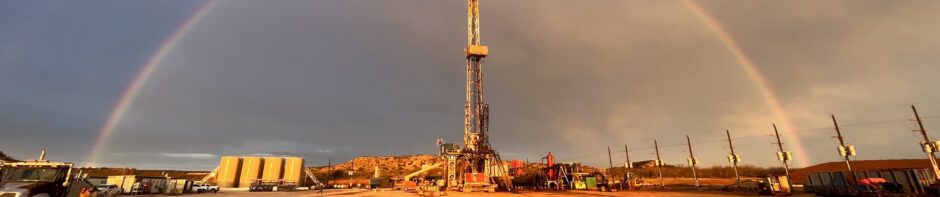
Here’s a step-by-step breakdown of the key operations and Bottom Hole Assembly (BHA) components involved in drilling and casing from the tophole to the production phase:
- Initial Drilling & Conductor Casing:
Begin with tophole drilling using a suitable BHA (typically includes pilot bit, stabilizer, mud motor or rotary BHA, and MWD tools).
Circulate drilling mud to clean the hole and condition the formation.
Run conductor casing to stabilize unconsolidated formations.
Perform primary cementing to secure the conductor casing in place.
- Installing First Wellhead & BOP:
Install the first wellhead housing over the conductor.
Install the Blowout Preventer (BOP) to ensure well control and pressure containment.
- Intermediate Section Drilling:
Drill down to the planned depth for intermediate casing using an upgraded BHA (includes PDC bit, stabilizers, jars, heavy-weight drill pipe, MWD/LWD tools).
Run the intermediate casing to isolate unstable or high-pressure formations.
Set the float collar, shoe, and release plug, followed by the cementing job to secure the casing.
- BOP Pick-Up & Second Wellhead Installation:
Pick up and reinstall the BOP with proper testing.
Install the intermediate wellhead component to accommodate the next phase.
- Drilling to Production Depth:
Continue drilling through the reservoir section using a precision BHA setup suitable for production hole (e.g., roller cone or PDC bit, stabilizers, logging tools).
Run the production casing or liner to the bottom of the well.
Execute the final cementing job to isolate the production zone and prevent fluid migration.
- Preparing for Production:
Pick up BOP again and install final wellhead spool or tubing head.
Run tubing string into the wellbore for production.
Remove BOP and install the Christmas Tree (X-Mas Tree) to control and monitor the well.
With the tree in place, production begins!
This sequence forms the backbone of a typical oil or gas well lifecycle—from drilling the first few meters to safely producing hydrocarbons.
Tag a drilling engineer, wellsite supervisor, or cementing specialist who’d appreciate this walkthrough!